
// 2023
Malagasy Cockerels
Location
Regions around Antananarivo, Madagascar
Subject
Malagasy Cockerels
Year
2023
Format
Digital
Short Description
Portraits of prize Malagasy fighting cockerels photographed across the landscapes of Madagascar, from rice paddies and hay fields to mountain tops and volcanic rocks. Each bird is placed within a grand natural backdrop, elevating a small creature into a monument of courage, resilience and heroism.
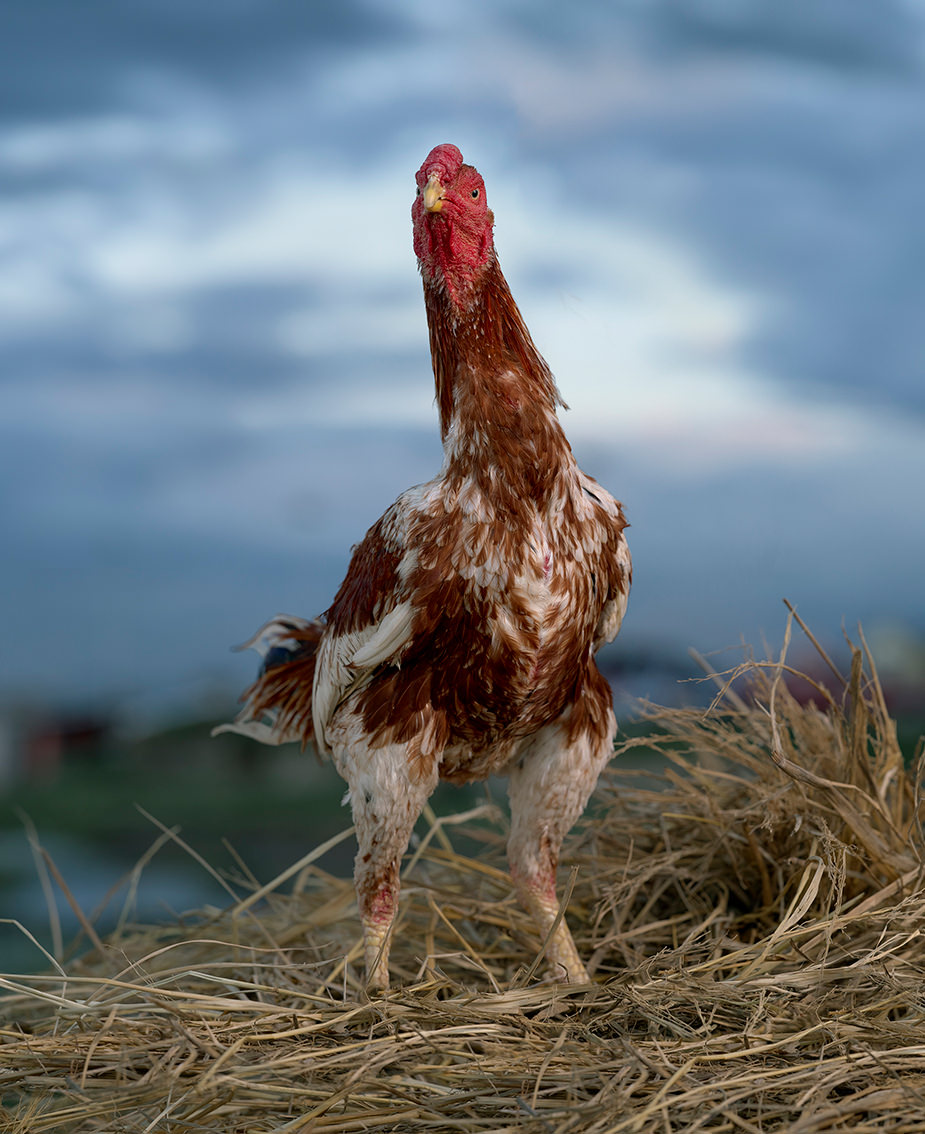
Beton. Tsatsaka breed, Malagasy cockerel, Ambodimita area, Madagascar, 15 May 2023
Image size
H: 102.94cm
W: 84cm
Edition out of 8 + 2AP
Image size
H: 170cm
W: 138.7cm
Edition out of 8 + 2AP
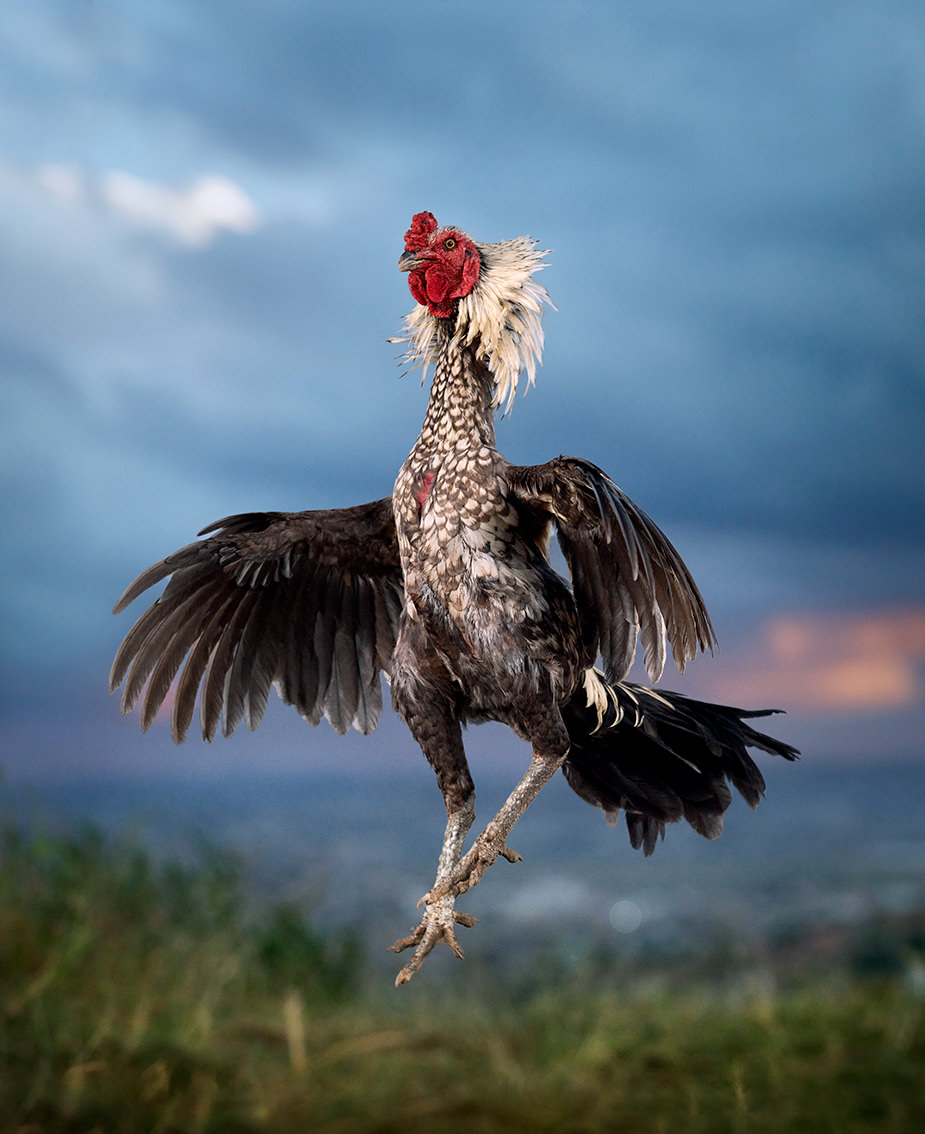
Ongback (meaning giant). Marisa breed, Malagasy cockerel, Imerinkasina area, Madagascar, 13 May 2023
Image size
H: 102.94cm
W: 84cm
Edition out of 8 + 2AP
Image size
H: 170cm
W: 138.7cm
Edition out of 8 + 2AP
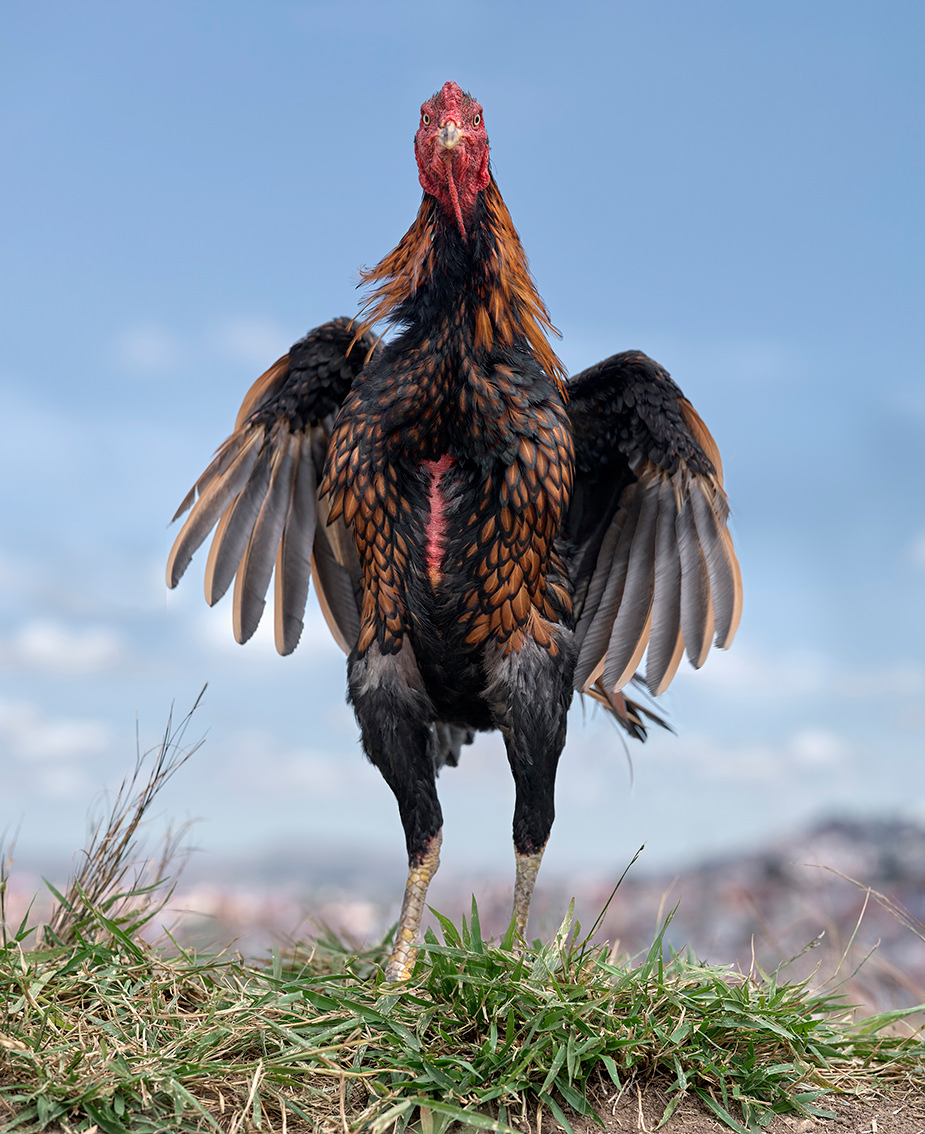
Jet Lee. Masira breed, Malagasy cockerel, Ankatso area, Madagascar. 11 May 2023
Image size
H: 102.94cm
W: 84cm
Edition out of 8 + 2AP
Image size
H: 170cm
W: 138.7cm
Edition out of 8 + 2AP
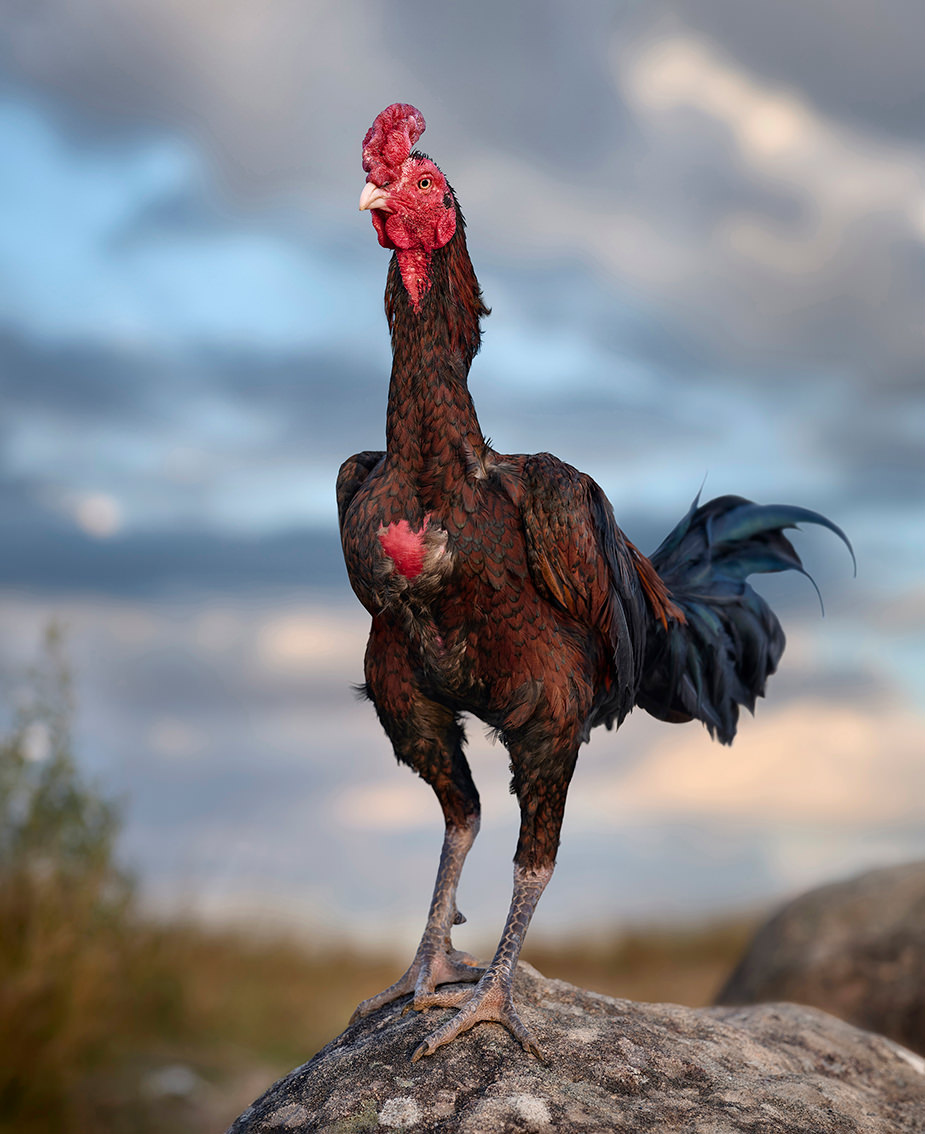
Lava Sanga (meaning long crest). Mena Kely - Son of Minator, Malagasy cockerel, Madagascar, 16 May 2023
Image size
H: 102.94cm
W: 84cm
Edition out of 8 + 2AP
Image size
H: 170cm
W: 138.7cm
Edition out of 8 + 2AP
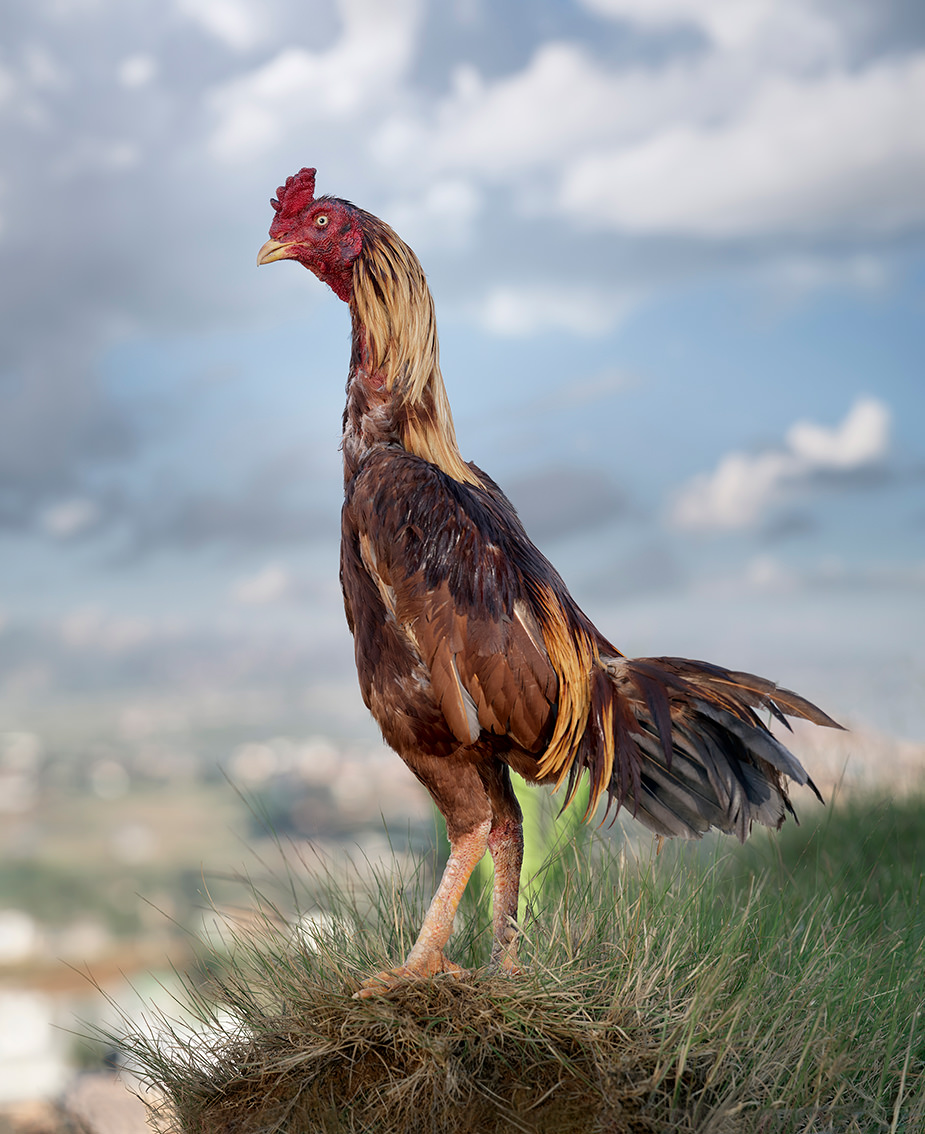
Max. Mavokely and Volombavy breed, Ankatso area, Malagasy cockerel, Madagascar. 16 May 2023
Image size
H: 102.94cm
W: 84cm
Edition out of 8 + 2AP
Image size
H: 170cm
W: 138.7cm
Edition out of 8 + 2AP
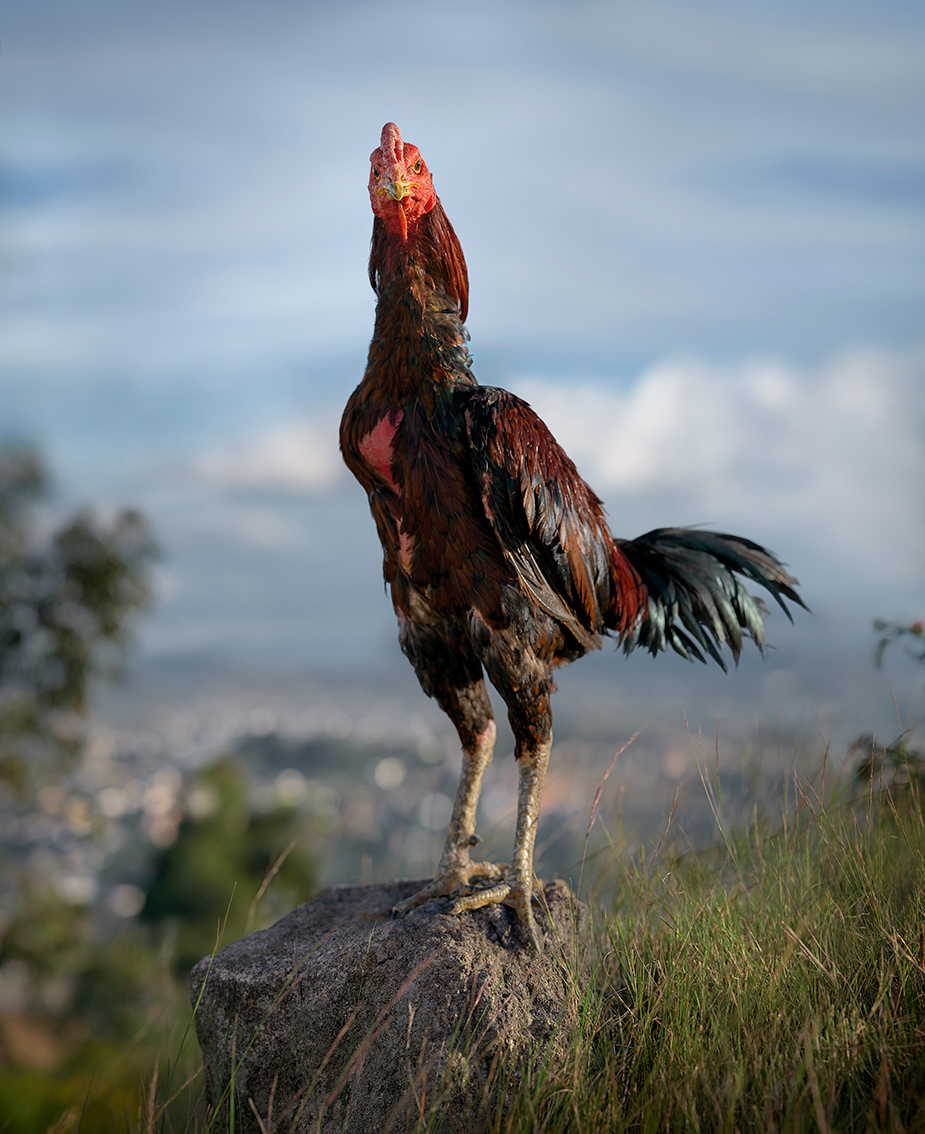
Pony. Kala mena breed from Reunion Island. Ankatso area, Malagasy cockerel, Madagascar, 10 May 2023
Image size
H: 102.94cm
W: 84cm
Edition out of 8 + 2AP
Image size
H: 170cm
W: 138.7cm
Edition out of 8 + 2AP
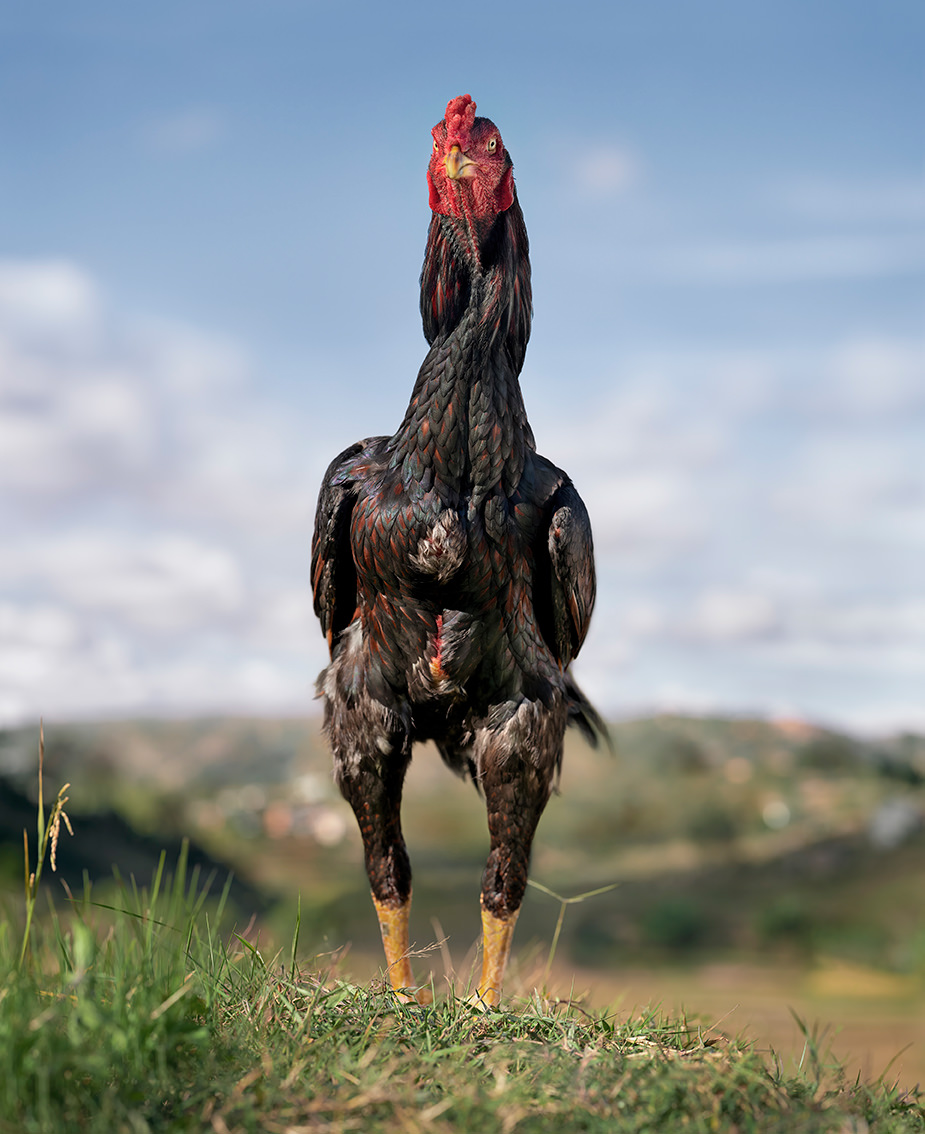
Robocop. Kala mena breed, Malagasy cockerel, Imerinkasina area, Madagascar, 12 May 2023
Image size
H: 102.94cm
W: 84cm
Edition out of 8 + 2AP
Image size
H: 170cm
W: 138.7cm
Edition out of 8 + 2AP
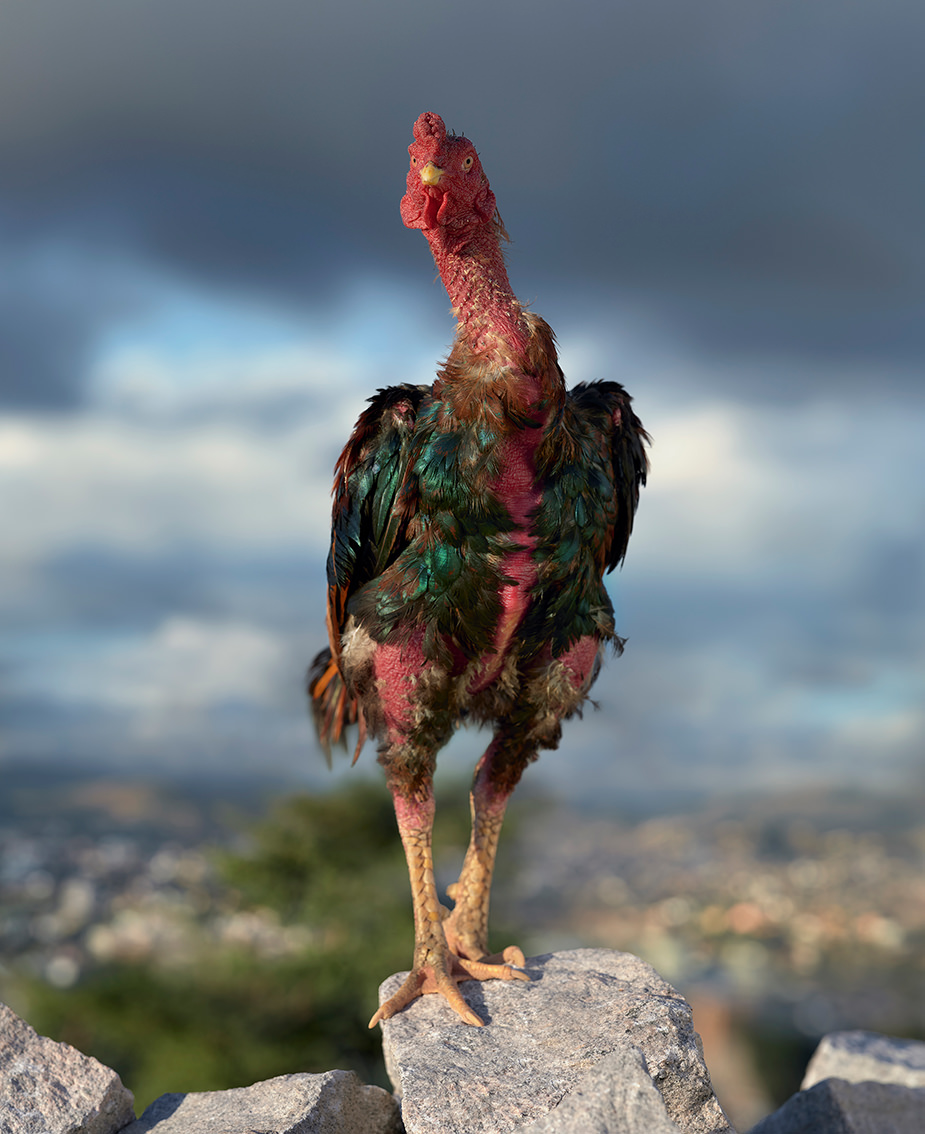
Terminator. Kala mena breed, Malagasy cockerel, Ankatso area, Madagascar, 11 May 2023
Image size
H: 102.94cm
W: 84cm
Edition out of 8 + 2AP
Image size
H: 170cm
W: 138.7cm
Edition out of 8 + 2AP
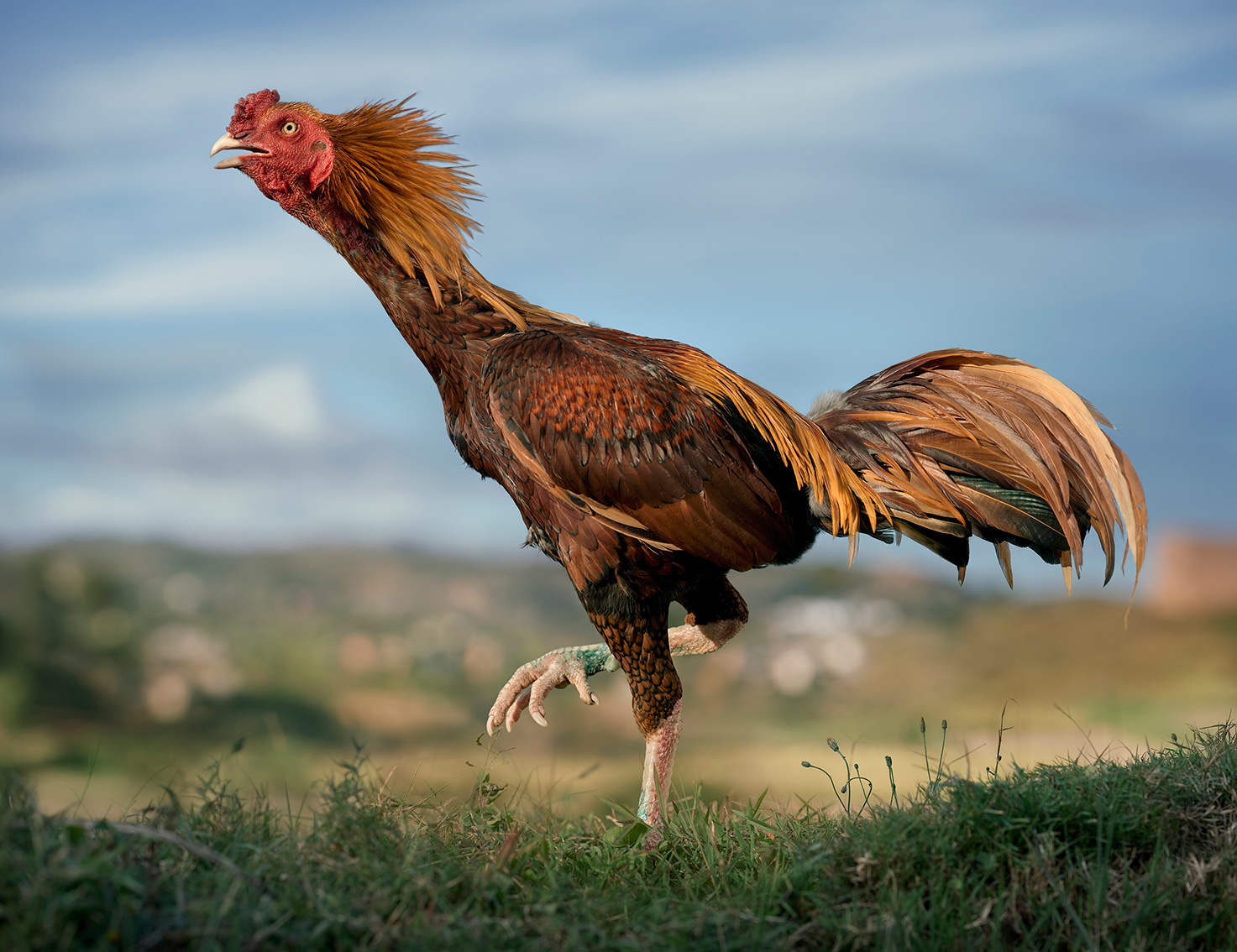
Mavolambo. (meaning the golden one), Volombavy breed, Malagasy cockerel, Imerinkasina area, Madagascar, 12 May 2023
Image size
H: 84cm
W: 109.09cm
Edition out of 8 + 2AP
Image size
H: 130cm
W: 168.83cm
Edition out of 8 + 2AP
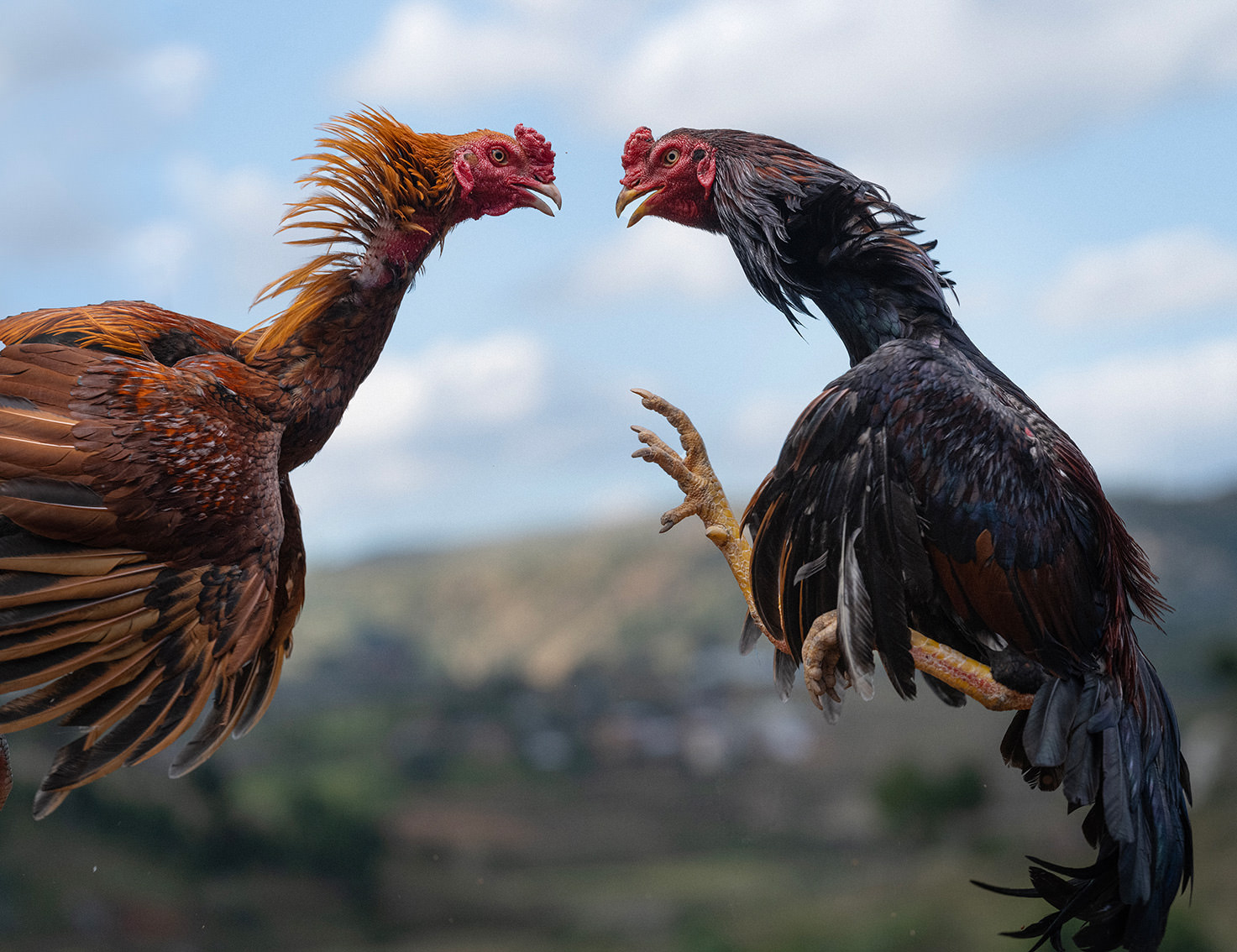
Mavolambo. (meaning the golden one) and Robocop, Malagasy cockerels, Imerinkasina area, Madagascar, 12 May 2023
Image size
H: 84cm
W: 109.09cm
Edition out of 8 + 2AP
Image size
H: 130cm
W: 168.83cm
Edition out of 8 + 2AP
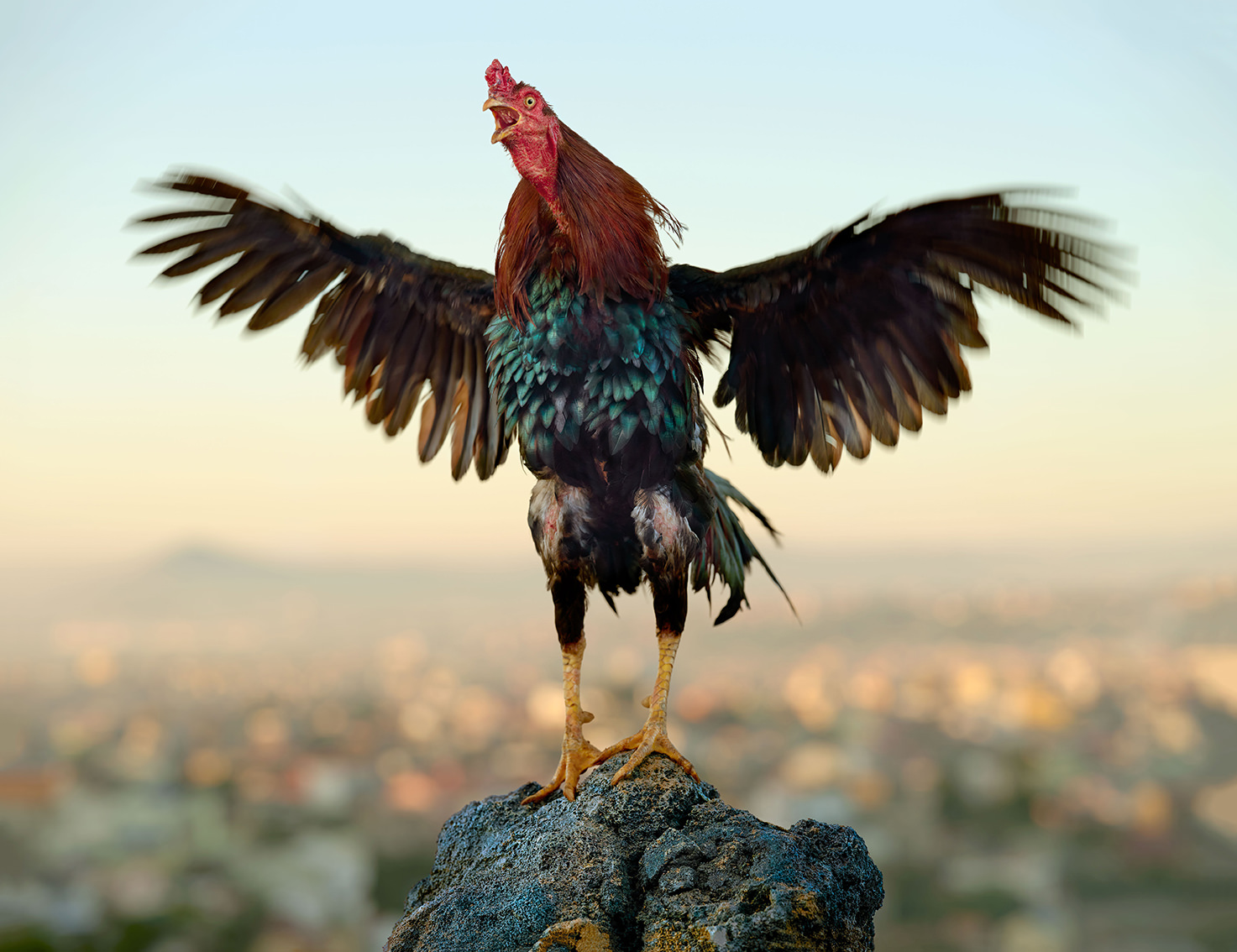
Tapaka standing on volcanic rock at sunrise. Masira breed, Ankatso city, Malagasy cockerel, Madagascar. 17 May 2023
Image size
H: 84cm
W: 109.09cm
Edition out of 8 + 2AP
Image size
H: 130cm
W: 168.83cm
Edition out of 8 + 2AP
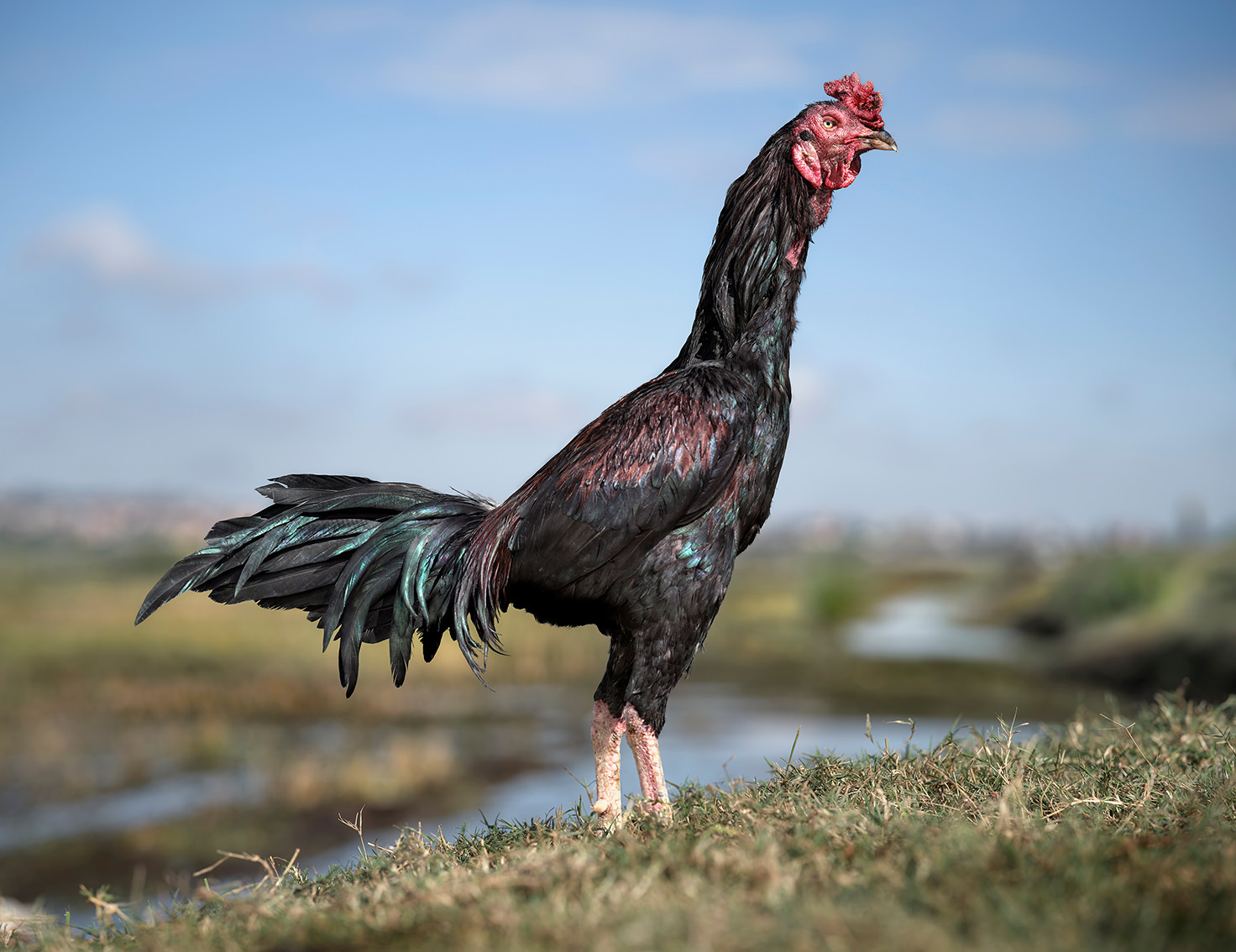
Tex. Kala mena breed, Malagasy cockerel, Ambodimita area, Madagascar, 11 May 2023
Image size
H: 84cm
W: 109.09cm
Edition out of 8 + 2AP
Image size
H: 130cm
W: 168.83cm
Edition out of 8 + 2AP
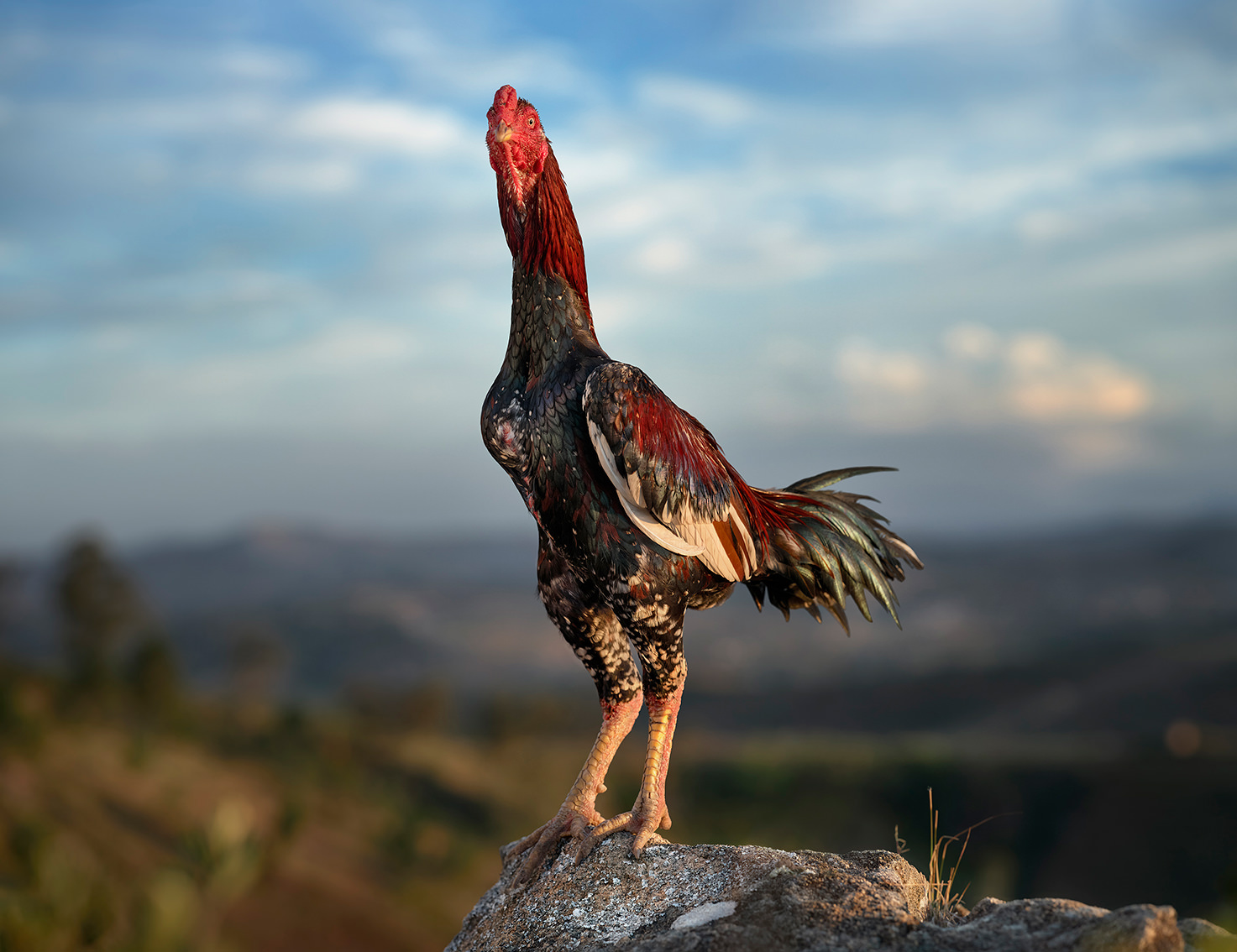
Bain (meaning Pappa). Mara breed, Malagasy cockerel, Imerinkasina area, Madagascar, 12 May 2023
Image size
H: 84cm
W: 109.09cm
Edition out of 8 + 2AP
Image size
H: 130cm
W: 168.83cm
Edition out of 8 + 2AP
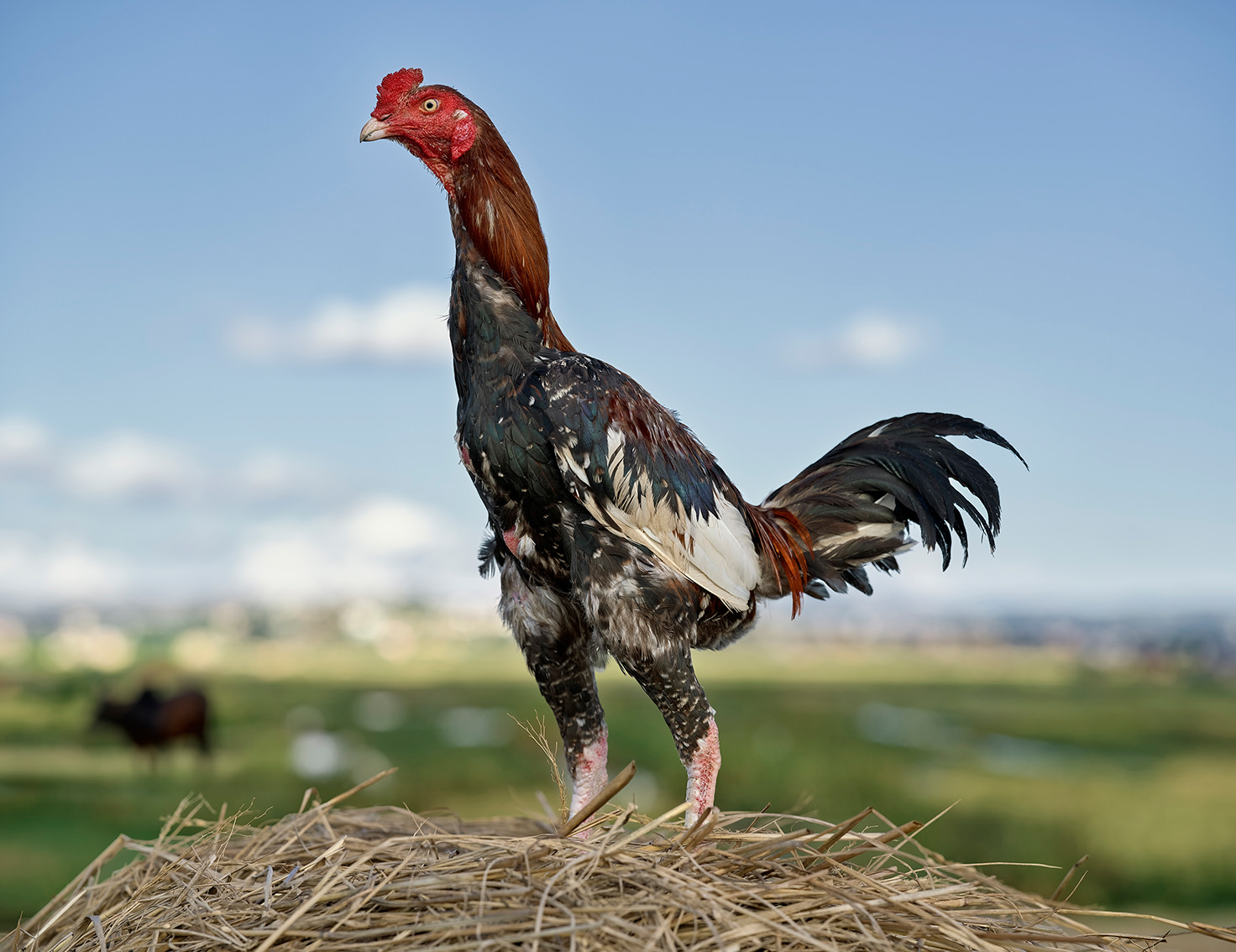
Turbo. Voloboahirana (meaning waterlily) breed, Malagasy cockerel, Soavimasoadro area, Madagascar, 15 May 2023
Image size
H: 84cm
W: 109.09cm
Edition out of 8 + 2AP
Image size
H: 130cm
W: 168.83cm
Edition out of 8 + 2AP
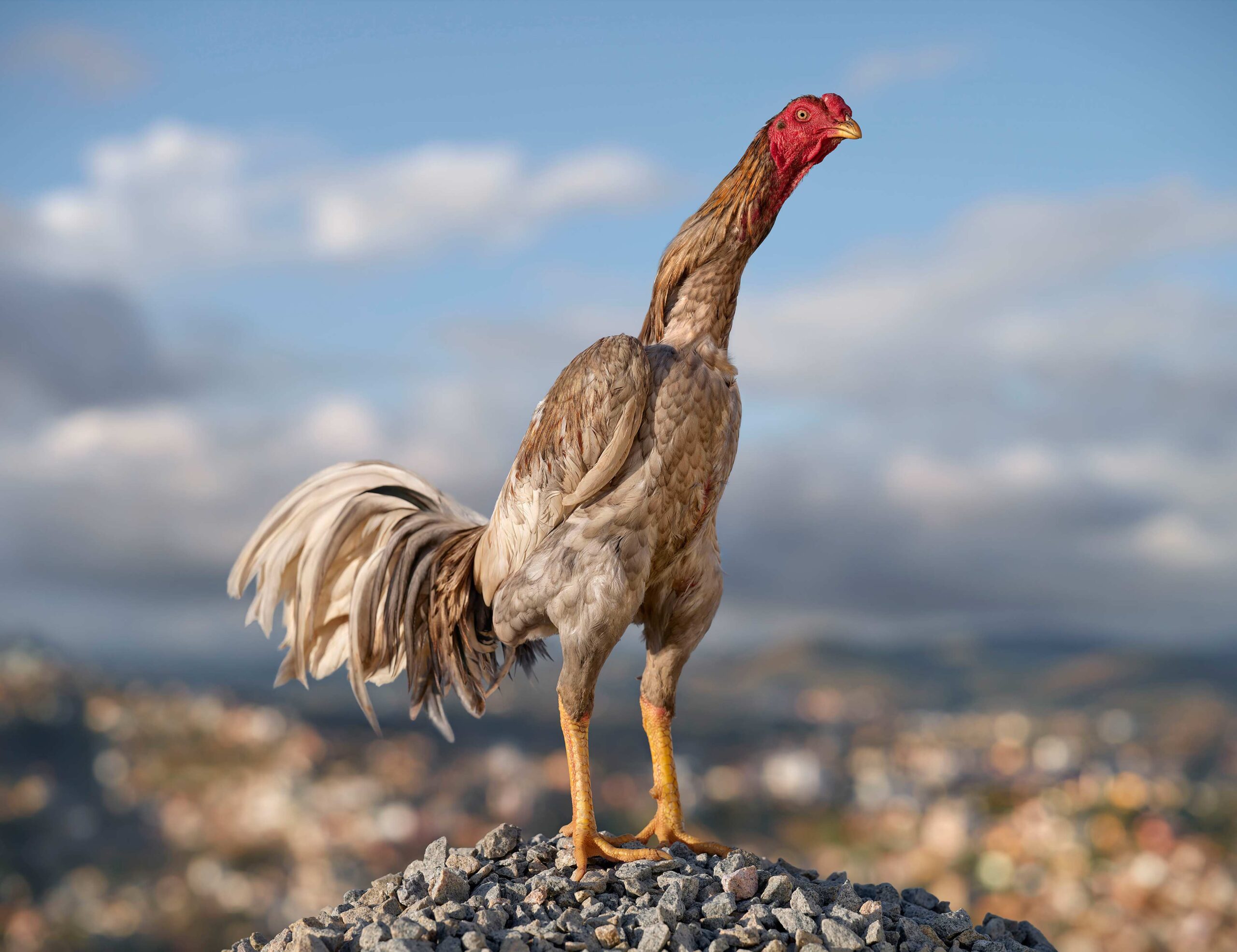
Zidane. Volomboahirana breed. Malagasy cockerel, Ankatso area, Madagascar. 11 May 2023
Image size
H: 84cm
W: 109.09cm
Edition out of 8 + 2AP
Image size
H: 130cm
W: 168.83cm
Edition out of 8 + 2AP
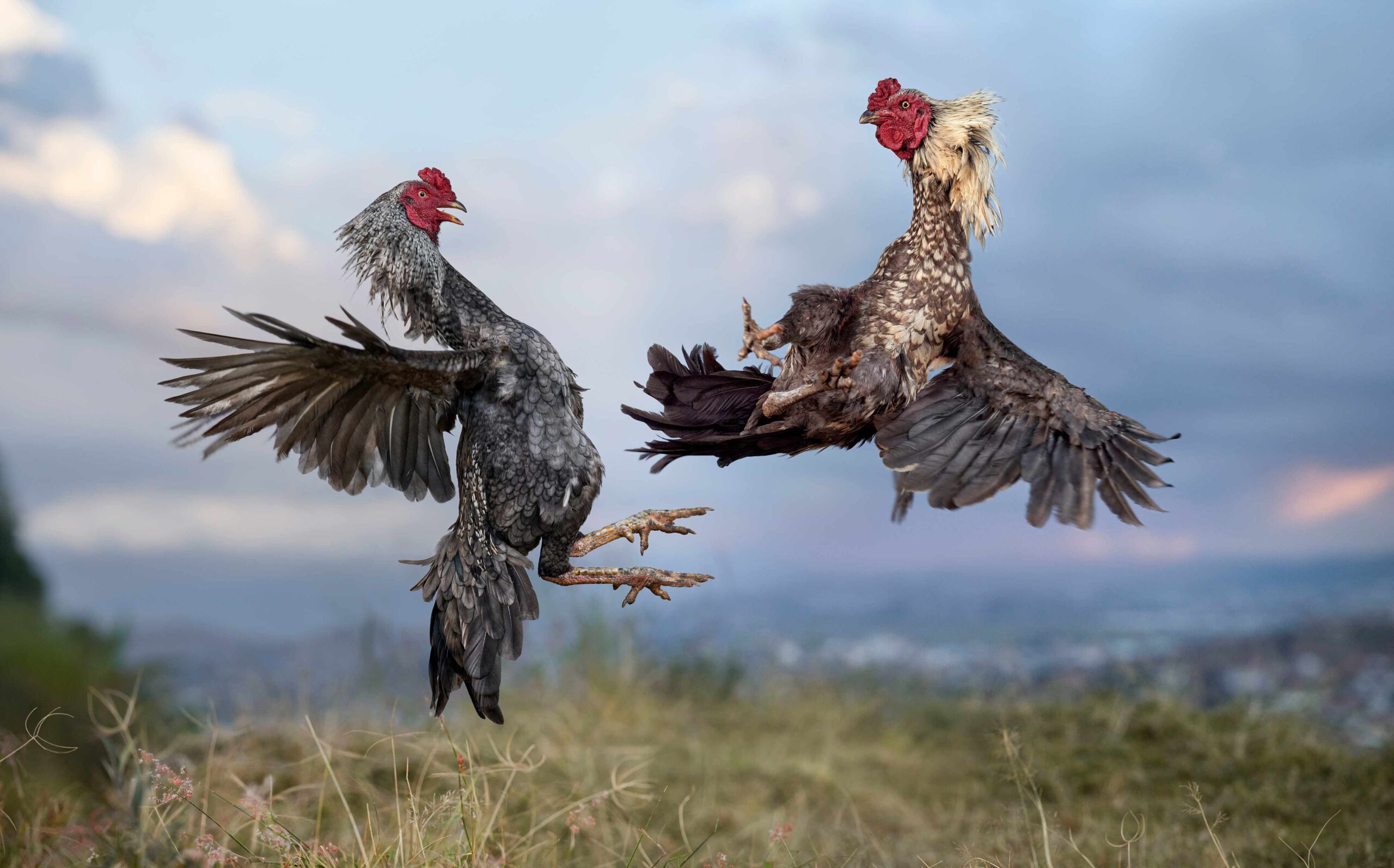
Tsofa (meaning saw), Kala Mena and Mandidy (meaning cutter), Masira, Malagasy cockerels, Madagascar, 21 May 2023
Image size
H: 84cm
W: 134.09cm
Edition out of 8 + 2AP
Image size
H: 130cm
W: 208.78cm
Edition out of 8 + 2AP
Malagasy Cockerels
In all my projects, I strive to create a frame where the subject – be it animal or human – commands a certain presence, stirring something deeply familiar in the viewer. These encounters, vivid and fleeting, build up to a language of feeling that transcends borders. I found the perfect environment for such encounters in Madagascar.
Madagascar is an island renowned for its strange and interesting animals and other unique creatures as well as now-extinct animals like the elephant bird. In 2013, I set off to Madagascar to work on a previous project, Sightings of the Sacred, focusing only on the zebu cattle, which formed one chapter of the project, and their meaning to the Malagasy people.
We travelled south to photograph the unique tombs of the Mahafaly tribe near Sakaraha. The tombs are decorated with carved wooden totems of zebu cattle, symbolically connecting the tombs to the afterlife. I gained a deeper understanding of the concept of fady – a system of taboos and sacred prohibitions.
During our journey southwards towards Toliara, I stopped on the side of the road to take a photograph of a landscape scene filled with endless rice paddies, cattle grazing and cheering in the distance. In a small settlement, I found the cause of the excitement – it appeared that chickens were fighting, and they were supporting this scene.
As we ventured further south through small villages, I began seeing more and more cockerels and chickens. In one village, I saw three men standing together on the corner of a street, each holding massive, muscular cockerels. They were busy combing and grooming the birds, treating them almost like beloved pets. My guide, Rija, explained that those were fighting cocks, a popular and lucrative sport in Madagascar. I made a note of this in my diary that evening.
A few years later, I read an online news article about cockfighting in Madagascar, describing its culture and how important it was for the Malagasy people. The ‘sport’ was even more popular than football. Owners of these cockerels are professional breeders, aiming to breed supreme birds, similar to stud breeding, and winning cockerels are sold for high prices and become famous. When traveling outside Antananarivo, cock fighting stadiums are seen on most corners of the neighbourhoods, where owners’ cockerels compete over weekends. This took me back to my diary and I knew this was a project I had to undertake.
In Madagascar, owners come from all walks of life: the poor, the middle class, even government elites. Their birds compete against one another in a pure contest where background and class fall away, and only the spirit of the animal matters. For many, a successful cockerel offers a rare doorway out of poverty – a chance at a different life. These birds are far more than fighters; they are living symbols of hope, ambition and resilience. Perhaps this reminds us that in life, our unseen efforts, our unnoticed strengths, can eventually lead to triumph.
In 2023, I travelled back to the island to portray these majestic Malagasy cockerels. Rija had organised numerous appointments with several breeders. At first, I photographed the cockerels in backyards; however, this was not art. I told Rija that the photographs needed to look heroic. I showed him cockerel paintings as examples and said they had to stand on a hill or in the country side. I showed him historical cockerel artworks and said they needed to be portrayed standing tall in the countryside, atop hills, against grand, natural backdrops. The background played a vital role in the final works. Some backgrounds were the famous and well-known rice paddies stretching into the distance, hay fields, volcanic rocks and granite boulders, on mountain tops and hills crowned by the sky or a city in the background. The landscape preserves the rawness and authenticity of their existence.
The real challenge was convincing the breeders to allow their valuable birds to be taken to distant locations – sometimes at sunrise atop a mountain, or hours away at sunset. It took some serious persuasion, but just a day later, we were traveling in a bus full of cockerels and their owners to the most desirable locations selected during my visit. The work began to fall into place.
We continued to visit top breeders and even attended a cockfighting event at one of the island’s most famous arenas. The experience brought the culture into vivid focus. I am not a supporter of cockfighting itself; instead, I was drawn to the profound bond between the owners and their birds – a silent language of pride, hope and deep admiration that I wanted to capture without needing to show the owners themselves in the photographs.
The names given to these cockerels – Terminator, Robocop, Tex, Turbo – made them sound even more like heroes! There are also different breeding lines of cockerels. Some breeds are native to Madagascar, while others were introduced from nearby islands such as Réunion. Crossbreeding was believed to combine the most prized attributes of each lineage. Yet despite the science and tradition behind breeding, success often came down to a less tangible factor: the ‘mind’ of the cockerel; its will to win. Breeders believed certain bloodlines carried special traits: strength, height, intelligence and resilience. There was an undeniable art to this selective breeding, a reverence for form and spirit.
I was inspired by the works of 18th-century British painter Henry Thomas Alken’s fighting cock works. Cockerels have long fascinated artists – from Alken to Picasso – and in Madagascar, I found living echoes of this historical fascination. I wanted to capture a variety of breeds, each one finely selected and placed in a landscape chosen by his presence. As the project evolved, the works started to bind together and became more monumental and otherworldly on a larger scale. A small creature, one of the most consumed animals on Earth, is here elevated to the role of a monument, symbolising courage, watchfulness, alertness and readiness. During my stay, I wrote the following reflection:
“Finally, I am out of the house, traveling again, making art!
The unexplainable ecstasy I feel in these moments – I had missed it so deeply.
Being immersed in a foreign culture neutralises the constructed mindset I carry from home. I become truly alive, drawing on the experiences I have gathered through previous projects. Whether facing a dog, cow, cockerel or sheep through my lens, I apply the same intuitive approach.
This energy – the collaboration between instinct, environment and subject – feeds the creation of something powerful and spiritual.
My encounters with animals, and the resulting photographs, reflect the mutual surprise, wonder and fascination that both man and animal seem to experience in confronting each other. Is the animal following my script, in a performance of my making, or of its own? Is there a script at all?
Each animal’s pose or ‘performance’ went beyond any preconceived ideas I may have had, and in reality, these encounters were far more compelling than can be conveyed. Each captured moment is a glimpse of a ‘meeting point’ between me and the animal in the natural realm, experiences that fuelled me during the working process.
I do not know what animals think – they are as silent as my photographs. Yet, I recognise my own being in theirs. Nothing I have read about animals can sufficiently account for the intensity I experienced in these encounters. For me, the presence of an animal remains unfathomable, unexplained, yet incredibly potent: perhaps a threat – the presence of a predator; perhaps that of a protector.
There is a mutual ‘now-ness’ to this collection: a quiet exchange between animal, human and camera. This project explores survival, struggle, resilience and heroism. The naming of the cockerels brings them closer to our human experience – much like naming a beloved dog – but unlike dogs, the trust between man and cockerel must be earned differently.
Life isn’t always easy; it is filled with unpredictability, challenges and quiet battles. Through these portraits, I aimed to capture deep, perceptual emotions: struggle, resilience and, ultimately, a sense of heroism.“
— Quote by Daniel Naudé
INFORMATION REQUIRED
To request a print or enquire about an image, please include the photo name and any relevant details below.
Previous
Next